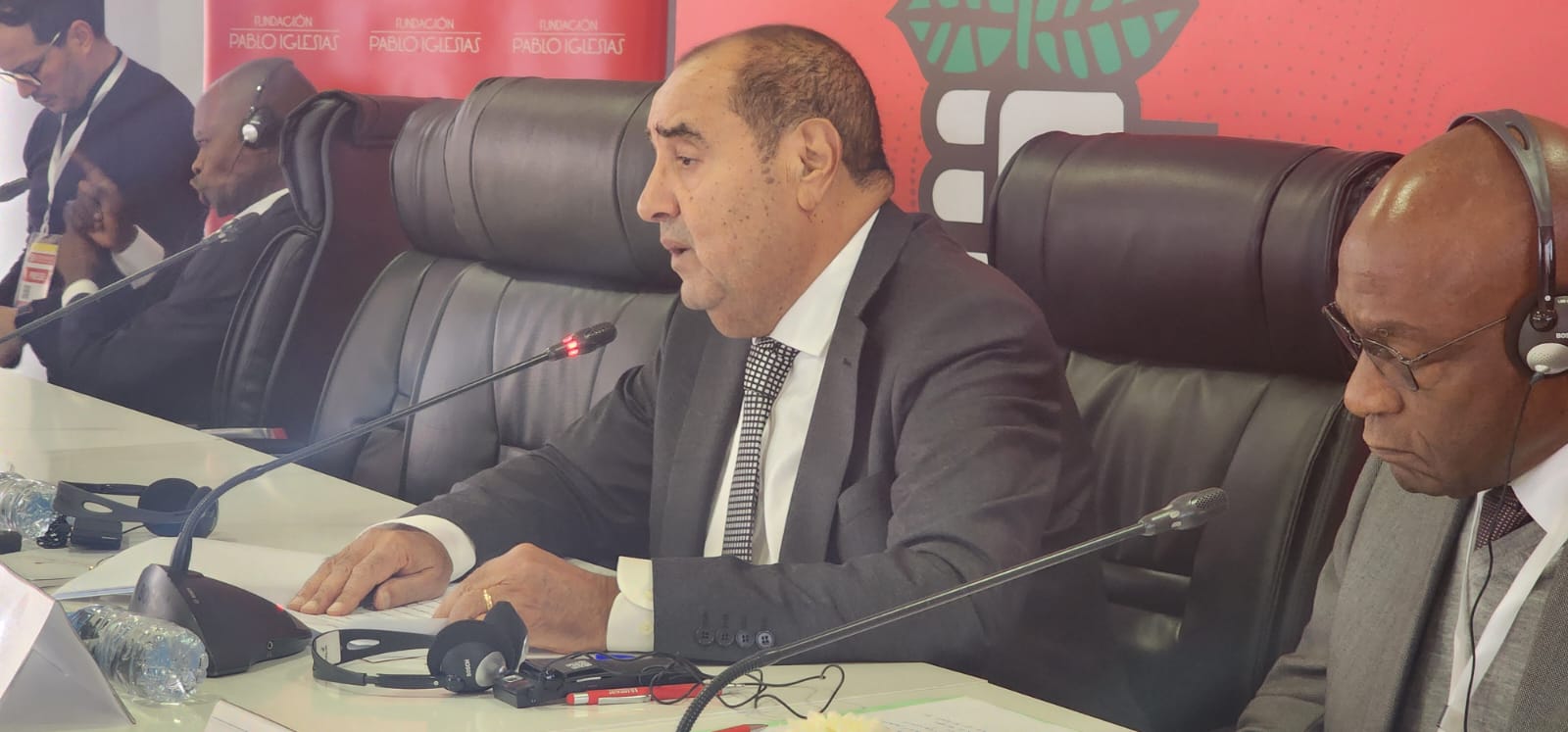
During the meeting of the African Committee of the Socialist International on Tuesday, December 17, 2024, at the headquarters of the Socialist Union of Popular Forces (USFP) in Rabat, Idriss Lachgar, the party’s First Secretary, shared Morocco’s vision for the future of Africa. This bold vision seeks to transform the continent into a “land of opportunity,” with peace and development serving as the cornerstones of a collective renaissance.
Lachgar highlighted the deep-rooted historical ties between Morocco and Africa, which are now further strengthened by His Majesty King Mohammed VI. He pointed out that these relationships go beyond economic exchanges, encompassing profound cultural, religious, and human bonds that have evolved over centuries. Morocco, with its strategic location and cultural openness, has long served as a bridge connecting the northern and southern parts of the continent, fostering dialogue and cooperation across various levels.
Proud of Morocco’s achievements, Lachgar emphasized that the country has signed more than 1,000 cooperation agreements with numerous African nations in areas such as education, agriculture, economy, and culture. These agreements, he affirmed, are a testament to Morocco’s genuine commitment to building balanced partnerships grounded in the principle of mutual benefit.
Transformative projects for a unified Africa
Among the key initiatives discussed, the Nigeria-Morocco gas pipeline took center stage. This project, set to span 13 African countries, is more than just an energy infrastructure; it represents a backbone for development, significantly contributing to the electrification of countries with limited access to electricity. Lachgar described this initiative as a symbol of African solidarity, aiming to promote economic integration and accelerate development across the continent.
Lachgar also underscored Morocco’s Atlantic Initiative, which brings together 23 African nations along the Atlantic Ocean. This strategic project seeks to create an integrated economic zone that will boost trade and enhance regional stability. He mentioned important infrastructure projects like the Dakhla Atlantic Port, which is envisioned as a key hub for both African and global trade.
Commitment to peace and stability
On the security front, Lachgar reaffirmed Morocco’s steadfast commitment to promoting peace and stability in Africa. The Kingdom remains one of the leading contributors to United Nations peacekeeping missions, reflecting a foreign policy grounded in respect for state sovereignty and non-interference. This commitment, he explained, is part of an African vision based on fraternity and shared responsibility, both crucial for achieving lasting security on the continent.
South-South cooperation for a shared future
In concluding his address, Lachgar called for intensified collective efforts to turn Africa’s challenges into tangible opportunities. He stressed the importance of ambitious and solidarity-driven South-South cooperation, capable of positioning Africa as the continent of the future. With concrete initiatives and transformative projects, Africa can emerge as a space for innovation, stability, and shared prosperity, he affirmed.
Lachgar ended by praising Morocco’s historic and strategic role as a bridge between African nations, reaffirming that the values of solidarity, justice, and cooperation lie at the heart of Morocco’s foreign policy. These values, he concluded, are essential to building a unified, ambitious, and prosperous future for Africa.





Comments
0